Skip to content
Vimeo-v Instagram Facebook-f Twitter
Shop
Events
Join Us
Donate
  • Campaigns
    • Save BC Wolves
      • Brutal British Columbia
      • Caribout Wolves
    • Save BC Bears
    • Bottom Trawling
    • Protect Pacific Herring
    • Marine Protection
    • Fish Farms Out
    • Research & Education
      • Science & Educational Resources
      • From Land to Sea: Great Bear Rainforest Story Map
  • Stories & News
    • All Articles
    • Bears
    • Wolves
    • Wild Salmon
    • Marine Protection
    • Herring
    • Bottom Trawling
    • Open Letters
    • In the News
      • Grizzly Bears In the News
      • Trawl Fisheries In the News
    • Press Releases
    • Conservation & Photography
  • Make A Difference
    • Take Action
    • Shop
      • Shop for Books and Apparel
      • Shop for Wildlife Prints
    • Save BC Wolves Online Community
    • Volunteer
    • Friends of Pacific Wild
    • #WildAuction Fundraisers
      • #WildAuction2023
  • Ways to Give
    • All Ways to Give
    • Leave a Gift in Your Will
    • Donate Stocks or Life Insurance
    • Corporate Giving
    • Donor Advised Funds
    • Foundation Giving
    • Donating by cheque or wire transfer
    • Start a Fundraiser
    • Fund our wishlist
    • Donate a Vehicle
    • Donor Support
  • About
    • Our Story
    • Our Team
    • Successes
    • IMAX
      • A Great Big Film
      • IMAX Educator Guide
    • We’re Hiring
  • Campaigns
    • Save BC Wolves
      • Brutal British Columbia
      • Caribout Wolves
    • Save BC Bears
    • Bottom Trawling
    • Protect Pacific Herring
    • Marine Protection
    • Fish Farms Out
    • Research & Education
      • Science & Educational Resources
      • From Land to Sea: Great Bear Rainforest Story Map
  • Stories & News
    • All Articles
    • Bears
    • Wolves
    • Wild Salmon
    • Marine Protection
    • Herring
    • Bottom Trawling
    • Open Letters
    • In the News
      • Grizzly Bears In the News
      • Trawl Fisheries In the News
    • Press Releases
    • Conservation & Photography
  • Make A Difference
    • Take Action
    • Shop
      • Shop for Books and Apparel
      • Shop for Wildlife Prints
    • Save BC Wolves Online Community
    • Volunteer
    • Friends of Pacific Wild
    • #WildAuction Fundraisers
      • #WildAuction2023
  • Ways to Give
    • All Ways to Give
    • Leave a Gift in Your Will
    • Donate Stocks or Life Insurance
    • Corporate Giving
    • Donor Advised Funds
    • Foundation Giving
    • Donating by cheque or wire transfer
    • Start a Fundraiser
    • Fund our wishlist
    • Donate a Vehicle
    • Donor Support
  • About
    • Our Story
    • Our Team
    • Successes
    • IMAX
      • A Great Big Film
      • IMAX Educator Guide
    • We’re Hiring
donate

Tag: Featured

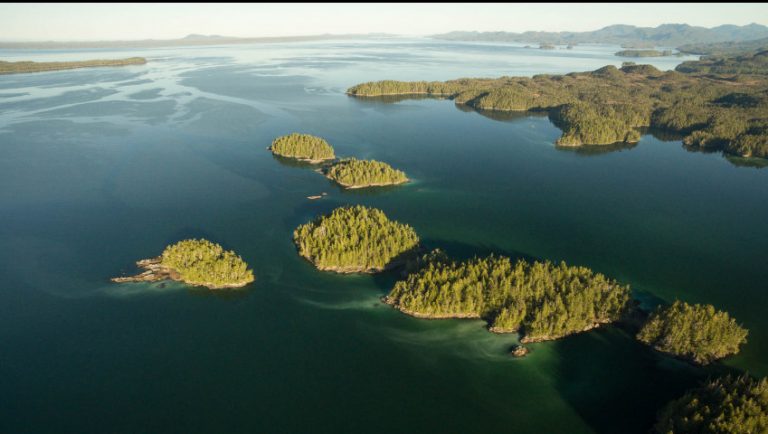
Great Bear Rainforest aerial view
Marine Protection

What Does Marine Protection Look Like in the Great Bear Rainforest?

Read More

Contact Us

Email: info@pacificwild.org

Phone: 250-380-0547

Main Office
1529 Amelia Street, Victoria, BC
Lək̓ʷəŋən Territory
V8W 2K1

Field Office
P.O. Box 26
Denny Island, BC
Haíɫzaqv Territory
V0T 1B0

quick links

1% for the Planet Pacific Wild
Stories & News
Marine Protection Microsite
Shop
Media Kit
Donor Portal
Donor Portal (US)
Benevity Matched Payroll Giving

Charity Navigator Rating

Instagram

❗Many people mistakenly assume that commercial herring harvesting happens only for a short window in the spring, when the herring spawn. In fact, the roe harvest is just one of four commercial herring fisheries in British Columbia. Three of these—the roe, food and bait, and special use fisheries—are kill fisheries. The fourth, the spawn-on-kelp fishery, is a traditional, non-lethal method of fishing for herring roe practiced by many coastal First Nations for millennia.

🐟 Despite being the only non-lethal option, the spawn-on-kelp fishery is being voluntarily closed on the Central Coast this year. The Heiltsuk First Nation has decided to keep the 2026 spawn-on-kelp fishery closed in their territory, choosing to forgo significant income to support the recovery of dwindling herring stocks. This action reflects deep concern for the health of local ecosystems and for a species foundational to coastal food webs and Indigenous cultural practices.

⚠️ Right now, the food and bait fishery is open for harvest in the Strait of Georgia, with at least one vessel currently removing herring from the ecosystem. This fishery typically targets herring in the fall and winter before they spawn, capturing both resident and migratory populations as they migrate to the coast. Herring are primarily killed to use as bait in other fisheries, source aquariums with feed, to make fish meal or fish oil for livestock, aquaculture feed, pet food and fertilizer.

❌ Allowing the continued removal of herring for low-value end uses undermines the health of the entire Salish Sea. As a vital forage species on which countless animals—and people—depend, treating herring as little more than expendable bait is a deeply shortsighted approach to ocean stewardship.

📸 @iantmcallister

#ProtectPacificHerring #PacificHerring #Herring #BIGlittlefish #SalishSea

170 2
Open post by pacificwild with ID 17969263292833404
❗Many people mistakenly assume that commercial herring harvesting happens only for a short window in the spring, when the herring spawn. In fact, the roe harvest is just one of four commercial herring fisheries in British Columbia. Three of these—the roe, food and bait, and special use fisheries—are kill fisheries. The fourth, the spawn-on-kelp fishery, is a traditional, non-lethal method of fishing for herring roe practiced by many coastal First Nations for millennia.

🐟 Despite being the only non-lethal option, the  spawn-on-kelp fishery is being voluntarily closed on the Central Coast this year. The Heiltsuk First Nation has decided to keep the 2026  spawn-on-kelp fishery closed in their territory, choosing to forgo significant income to support the recovery of dwindling herring stocks. This action reflects deep concern for the health of local ecosystems and for a species foundational to coastal food webs and Indigenous cultural practices. 

⚠️ Right now, the food and bait fishery is open for harvest in the Strait of Georgia, with at least one vessel currently removing herring from the ecosystem. This fishery typically targets herring in the fall and winter before they spawn, capturing both resident and migratory populations as they migrate to the coast. Herring are primarily killed to use as bait in other fisheries, source aquariums with feed, to make fish meal or fish oil for livestock, aquaculture feed, pet food and fertilizer.

❌ Allowing the continued removal of herring for low-value end uses undermines the health of the entire Salish Sea. As a vital forage species on which countless animals—and people—depend, treating herring as little more than expendable bait is a deeply shortsighted approach to ocean stewardship.

📸 @iantmcallister

#ProtectPacificHerring #PacificHerring #Herring #BIGlittlefish #SalishSea
170 2

👪Looking for a family outing this weekend? Come experience the Great Bear Rainforest right in Vancouver.

Pacific Wild has partnered with VanDusen Botanical Garden to create a multi-media, immersive experience. 🐻‍❄️See Spirit Bears fish, wolves play, and eagles soar, right up close on video in the new Great Bear Rainforest Exhibit in the Visitor Centre, and projected outside on the garden’s sequoia trees by the light-up salmon run.
Their Dancing Lights display on Livingstone Lake is also inspired by the Great Bear Rainforest this year!

📅 Dates: November 28 to January 4 (open daily except for December 25)
🕑 Times: 4pm to 10pm daily
🎟️ Tickets: book an entry time online in advance at vandusenfestivaloflights.ca
📍 Location: VanDusen Botanical Garden, 5151 Oak Street Vancouver BC V6M 4H1

The Great Bear Rainforest Exhibit is highlight #1 on the map and located indoors in the Visitor Centre halls. This will be up for the entire event run!

👉 Step into a botanical wonderland this holiday season at VanDusen Festival of Lights. Explore 15 acres adorned with over 1 million twinkling lights, including exciting displays like the interactive mycelium installation, Wood Wide Web, and Salmon Run.
@vandusengarden

#WildlifeConservation #LightDisplay #WildlifePhotography #vandusenFOL

274 3
Open post by pacificwild with ID 18088186990994097
👪Looking for a family outing  this weekend? Come experience the Great Bear Rainforest right in Vancouver. 

Pacific Wild has partnered with VanDusen Botanical Garden to create a multi-media, immersive experience. 🐻‍❄️See Spirit Bears fish, wolves play, and eagles soar, right up close on video in the new Great Bear Rainforest Exhibit in the Visitor Centre, and projected outside on the garden’s sequoia trees by the light-up salmon run. 
Their Dancing Lights display on Livingstone Lake is also inspired by the Great Bear Rainforest this year!

📅 Dates: November 28 to January 4 (open daily except for December 25)
🕑 Times: 4pm to 10pm daily
🎟️ Tickets: book an entry time online in advance at vandusenfestivaloflights.ca
📍 Location: VanDusen Botanical Garden, 5151 Oak Street Vancouver BC V6M 4H1

The Great Bear Rainforest Exhibit is highlight #1 on the map and located indoors in the Visitor Centre halls. This will be up for the entire event run!

👉  Step into a botanical wonderland this holiday season at VanDusen Festival of Lights. Explore 15 acres adorned with over 1 million twinkling lights, including exciting displays like the interactive mycelium installation, Wood Wide Web, and Salmon Run.
@vandusengarden
 
#WildlifeConservation  #LightDisplay #WildlifePhotography  #vandusenFOL
274 3

🐺 The latest update from the Caribou Recovery Team, “Tracks” has now been released to the public, but the reporting feels increasingly misleading: oversight of the cull is minimal, with Wildlife Act exemptions allowing actions that would otherwise be illegal, and Animal Care guidelines in place but without independent inspection. Some Wildlife Habitat Areas still allow industry access, and ongoing habitat loss is downplayed.

📋 Recent polling shows most British Columbians strongly oppose the wolf cull once they learn it’s happening. 77% oppose killing wolves, 66% reject aerial shooting, and 71% agree that wolves should be protected for their vital role in healthy ecosystems — yet the province continues to justify the program as more forest is destroyed each year than restored.

🌲 Proven, science-backed alternatives exist: maintaining habitat connectivity, rebuilding winter lichen habitat, and supporting maternal penning programs, are but a few of the effective, non-lethal strategies available for supporting caribou recovery. These strategies tackle root causes — habitat loss, fragmentation, and human disturbance — rather than removing a keystone predator.

☠️ Despite this, B.C. continues to kill up to 80% of wolves in some regions with declining caribou, with over 2,500 wolves killed in the past decade. The province calls this a “short-term emergency measure,” yet carries it out year after year instead of investing in meaningful habitat protection, the most critical factor for caribou recovery.

👉 Follow Pacific Wild to learn more about the science on wolves, our work to end the wolf cull in B.C., and how you can take action to protect both wolves and caribou through real, evidence-based conservation strategies.

📸 by @iantmcallister and @lukeb_photography

#SaveBCWolves #CariboutWolves #WildlifeConservation

500 9
Open post by pacificwild with ID 18066691784428553
🐺 The latest update from the Caribou Recovery Team, “Tracks” has now been released to the public, but the reporting feels increasingly misleading: oversight of the cull is minimal, with Wildlife Act exemptions allowing actions that would otherwise be illegal, and Animal Care guidelines in place but without independent inspection. Some Wildlife Habitat Areas still allow industry access, and ongoing habitat loss is downplayed.

📋 Recent polling shows most British Columbians strongly oppose the wolf cull once they learn it’s happening. 77% oppose killing wolves, 66% reject aerial shooting, and 71% agree that wolves should be protected for their vital role in healthy ecosystems — yet the province continues to justify the program as more forest is destroyed each year than restored.

🌲 Proven, science-backed alternatives exist: maintaining habitat connectivity, rebuilding winter lichen habitat, and supporting maternal penning programs, are but a few of the effective, non-lethal strategies available for supporting caribou recovery. These strategies tackle root causes — habitat loss, fragmentation, and human disturbance — rather than removing a keystone predator.

☠️ Despite this, B.C. continues to kill up to 80% of wolves in some regions with declining caribou, with over 2,500 wolves killed in the past decade. The province calls this a “short-term emergency measure,” yet carries it out year after year instead of investing in meaningful  habitat protection, the most critical factor for caribou recovery.

👉 Follow Pacific Wild to learn more about the science on wolves, our work to end the wolf cull in B.C., and how you can take action to protect both wolves and caribou through real, evidence-based conservation strategies.

📸 by @iantmcallister and @lukeb_photography 

#SaveBCWolves #CariboutWolves #WildlifeConservation
500 9

❓Can you guess what this wolf is looking for? 🐺 Comment below ⬇️ and follow for more wildlife content.
#SaveBCWolves #CariboutWolves #WildlifeConservation

2228 62
Open post by pacificwild with ID 17848605189586417
❓Can you guess what this wolf is looking for? 🐺 Comment below ⬇️ and follow for more wildlife content. 
#SaveBCWolves #CariboutWolves #WildlifeConservation
2228 62

🐟 The public comment period on the fishery management plan for herring in British Columbia closed on November 17. Just over ten days later, despite over 600 letters demanding a moratorium, the new season of the herring fishery opened. The official finalized fisheries plan has yet to be published and isn’t expected for several more weeks.

🚢 It does not appear that active fishing has begun; however, Fisheries and Oceans Canada (DFO) officially opened the winter Food & Bait herring fishery in the Strait of Georgia on November 28, with a quota of 2,100 short tons — the weight of 700 African elephants, 350 killer whales, or 1,400 Honda Civics. This herring fishery is scheduled to remain open until February 12, 2026, and it is most likely to be immediately followed by the opening of the herring roe fishery, as seiners and gillnetters try to catch and kill female fish full of roe before they lay their eggs in the spring spawn.

📅 It wasn’t until December 2, 2025, after the Food and Bait fishery was already opened, that DFO made 2025/2026 Herring Food & Bait licences available. Under the upcoming Integrated Fisheries Management Plan (IFMP), Roe Herring Seine licence eligibility holders will receive an equal share of the Roe Herring and Food & Bait quotas and may choose which fishery to apply that share to, pending final plan approval.

⚠️ As of now, no licence-report details have been released publicly.

🔎 Pacific Wild will be monitoring this fishery. We are tracking vessel activity and cross-referencing licence information when it becomes available to document when, where, and how much herring is being removed from the Strait of Georgia during this Food & Bait fishery.

📸 @iantmcallister

#ProtectPacificHerring #PacificHerring #BIGlittlefish #SustainableFisheries

161 2
Open post by pacificwild with ID 18106047196730671
🐟 The public comment period on the fishery management plan for herring in British Columbia closed on November 17. Just over ten days later, despite over 600 letters demanding a moratorium, the new season of the herring fishery opened. The official finalized fisheries plan has yet to be published and isn’t expected for several more weeks.

🚢 It does not appear that active fishing  has begun; however, Fisheries and Oceans Canada (DFO) officially opened the winter Food & Bait herring fishery in the Strait of Georgia  on November 28,  with a quota of 2,100 short tons — the weight of 700 African elephants, 350 killer whales, or 1,400 Honda Civics.  This herring fishery is scheduled to remain open until February 12, 2026, and it is most likely to be immediately followed by the opening of the herring roe fishery, as seiners and gillnetters try to catch and kill female fish full of roe before they lay their eggs in the spring spawn.
 
📅 It wasn’t until December 2, 2025, after the Food and Bait fishery was already opened, that DFO made 2025/2026 Herring Food & Bait licences available. Under the upcoming Integrated Fisheries Management Plan (IFMP), Roe Herring Seine licence eligibility holders will receive an equal share of the Roe Herring and Food & Bait quotas and may choose which fishery to apply that share to, pending final plan approval.

⚠️ As of now, no licence-report details have been released publicly. 

🔎 Pacific Wild will be monitoring this fishery. We are tracking vessel activity and cross-referencing licence information when it becomes available to document when, where, and how much herring is being removed from the Strait of Georgia during this Food & Bait fishery.

📸 @iantmcallister

#ProtectPacificHerring #PacificHerring #BIGlittlefish #SustainableFisheries
161 2

🐺🌍 Today is Wildlife Conservation Day and we are celebrating wolves worldwide
Wolves are icons of wild spaces, ecological balance, and cultural significance across the globe. From the resilient Grey wolf to the critically endangered Red wolf, these keystone predators play an essential role in maintaining healthy ecosystems.
Did you know there are two species and at least three subspecies of wolves living in Canada? From the Eastern Wolf to the Arctic, Timber, and coastal sea-wolves, Canada is home to an incredible diversity of canids found nowhere else on Earth.
Yet many wolf species are fighting for survival. Habitat loss, conflict with humans, hybridization, and targeted killing continue to threaten their futures. While some populations are stable, others stand on the brink of extinction.
Wolves have walked beside humanity for millennia, shaping ecosystems and cultures. They hold deep meaning for many Indigenous Nations across North America, appearing in the stories and symbols of Ancient Egypt, and continue to inspire people around the world today.
🐾 Right now in Canada, animals are still classified as property, not sentient beings.

📜The New York Declaration of Animal Consciousness, now backed by hundreds of global experts, confirms overwhelming scientific evidence:

➡️ All vertebrates and many invertebrates experience consciousness, sensation and emotion.

Leading Canadian scientists, veterinarians, ethicists, and advocacy organizations agree. 32 countries including the U.K., New Zealand, Australia, Switzerland, and the European Union have already recognized animal sentience in law.

Canada has not.

📢 Sign the petition, linked in our bio, urging the Canadian government to recognize animals as sentient beings, not property. 🔗
🐾🤍 Add your name, raise your voice, and change the law. ✍️

#WildlifeConservationDay #SaveBCWolves #Wolf Wolves WildlifeConservation

690 7
Open post by pacificwild with ID 17863507083457962
🐺🌍 Today is Wildlife Conservation Day and we are celebrating wolves worldwide
Wolves are icons of wild spaces, ecological balance, and cultural significance across the globe. From the resilient Grey wolf to the critically endangered Red wolf, these keystone predators play an essential role in maintaining healthy ecosystems.
Did you know there are two species and at least three subspecies of wolves living in Canada? From the Eastern Wolf to the Arctic, Timber, and coastal sea-wolves, Canada is home to an incredible diversity of canids found nowhere else on Earth.
Yet many wolf species are fighting for survival. Habitat loss, conflict with humans, hybridization, and targeted killing continue to threaten their futures. While some populations are stable, others  stand on the brink of extinction.
Wolves have walked beside humanity for millennia, shaping ecosystems and cultures. They hold deep meaning for many Indigenous Nations across North America, appearing in the stories and symbols of Ancient Egypt, and continue to inspire people around the world today.
🐾 Right now in Canada, animals are still classified as property, not sentient beings.

📜The New York Declaration of Animal Consciousness, now backed by hundreds of global experts, confirms overwhelming scientific evidence:

➡️ All vertebrates and many invertebrates experience consciousness, sensation and emotion.

Leading Canadian scientists, veterinarians, ethicists, and advocacy organizations agree. 32 countries including the U.K., New Zealand, Australia, Switzerland, and the European Union have already recognized animal sentience in law.

Canada has not.

📢 Sign the petition, linked in our bio, urging the Canadian government to recognize animals as sentient beings, not property. 🔗
🐾🤍 Add your name, raise your voice, and change the law. ✍️

#WildlifeConservationDay  #SaveBCWolves #Wolf Wolves WildlifeConservation
690 7
Follow on Instagram
1% for the Planet Environmental Partner

© 2025 PACIFIC WILD  •  All Photography © Ian McAllister unless otherwise noted. Managed by Mastermynde  •  Privacy Policy
•  Terms of Service

  • Donate Now
    ▾
    • Other Ways to Give
  • Campaigns
    ▾
    • Save BC Wolves
    • Fish Farms Out
    • Save BC Bears
    • Protect Pacific Herring
    • Marine Protection
    • Research & Education
      ▾
      • From Land to Sea: Great Bear Rainforest Story Map
      • SEAS Community Initiative
  • Stories & News
    ▾
    • All Articles
    • Wolves
    • Wild Salmon
    • Herring
    • Marine Protection
    • Bottom Trawling
    • Open Letters
    • In the News
    • Press Releases
    • Conservation & Photography
  • Make a Difference
    ▾
    • Take Action
    • Join the Save BC Wolves Online Community
    • Friends of Pacific Wild
    • Volunteer
  • About
    ▾
    • Our Story
    • Our Team
    • Successes
    • Partners
    • We’re Hiring
  • IMAX
    ▾
    • A Great Big Film
    • IMAX Educator Guide
  • Shop
    ▾
    • Shop for Books & Apparel
    • Shop for Prints
  • Call 1-250-380-0547
[dynamic-sidebar id="Default Sidebar"]
  • Donate Now
    ▾
    • Other Ways to Give
  • Campaigns
    ▾
    • Save BC Wolves
    • Fish Farms Out
    • Save BC Bears
    • Protect Pacific Herring
    • Marine Protection
    • Research & Education
      ▾
      • From Land to Sea: Great Bear Rainforest Story Map
      • SEAS Community Initiative
  • Stories & News
    ▾
    • All Articles
    • Wolves
    • Wild Salmon
    • Herring
    • Marine Protection
    • Bottom Trawling
    • Open Letters
    • In the News
    • Press Releases
    • Conservation & Photography
  • Make a Difference
    ▾
    • Take Action
    • Join the Save BC Wolves Online Community
    • Friends of Pacific Wild
    • Volunteer
  • About
    ▾
    • Our Story
    • Our Team
    • Successes
    • Partners
    • We’re Hiring
  • IMAX
    ▾
    • A Great Big Film
    • IMAX Educator Guide
  • Shop
    ▾
    • Shop for Books & Apparel
    • Shop for Prints
  • Call 1-250-380-0547