Beautiful B.C. Deserves More Than a Slogan
What a difference a year can make. The future of the B.C. coast is again in the spotlight as Canada pivots to extracting and moving as much of our natural resources through the west coast to Asia as possible. Under the banner of “nation-building”, LNG plants, pipelines, tankers, mines, and a host of other industrial projects, are being fast tracked, bypassing environmental assessments, First Nations consultation and many other critical safeguards that have helped protect fish and wildlife for decades. Past victories, like the oil tanker ban, and newer ones, like the Great Bear Sea Marine Protected Area Network, are now threatened by policies that trade long-term ecological health for short-term gain.
At Pacific Wild, our collective experience in fighting for those that don’t have a voice has only deepened. This year, we intensified our fight against bottom trawling—the wasteful fishery devastating marine ecosystems. We continued our campaign against the B.C. wolf cull, advocating for science-based caribou recovery and compassionate, ecosystem-based approaches. Nearly 2,000 species and ecosystems in the province are now considered at risk1 , making the need for robust biodiversity legislation more urgent than ever.
As new and familiar battles emerge, our frontline advocacy, fieldwork, research, mapping and visual storytelling remain essential tools in defending biodiversity. With your support, Pacific Wild and partners across B.C. are doubling down—to defend past gains and tackle emerging threats, protecting what’s wild and irreplaceable. The week I wrote this, in mid-November, we joined hundreds of British Columbians, rallying at government offices for old-growth forest protections and reduced industrial herring harvests. Collective actions like these–driven by public engagement and Indigenous leadership– have led to conservation wins before, and they can again.
Poll after poll shows that Canadians consistently say nature defines who we are—more than hockey, more than even healthcare.2 Our shared vision—clean water, thriving wildlife, healthy oceans, ancient forests, and Indigenous-led stewardship—remains the foundation for true nation-building.
We invite you to join us in shaping a future where “Beautiful B.C.” is more than a slogan: it’s a living legacy for generations to come.

Karen McAllister, Executive Director
This Year, Pacific Wild:


A Decade of Resistance
Fighting for wolves and caribou in B.C.
From December 2024 to March 2025, the province killed 351 wolves3—a sharp rise from the 248 wolves killed the previous season, and the second-highest total since the cull began in 2015. In the decade since, we’ve delivered over half a million signatures to the Legislature demanding an end to the slaughter. We’ve met with key decision makers, attended countless caribou recovery meetings, and continuously worked to challenge the ethics, legality and effectiveness of the wolf cull through legal action and research.
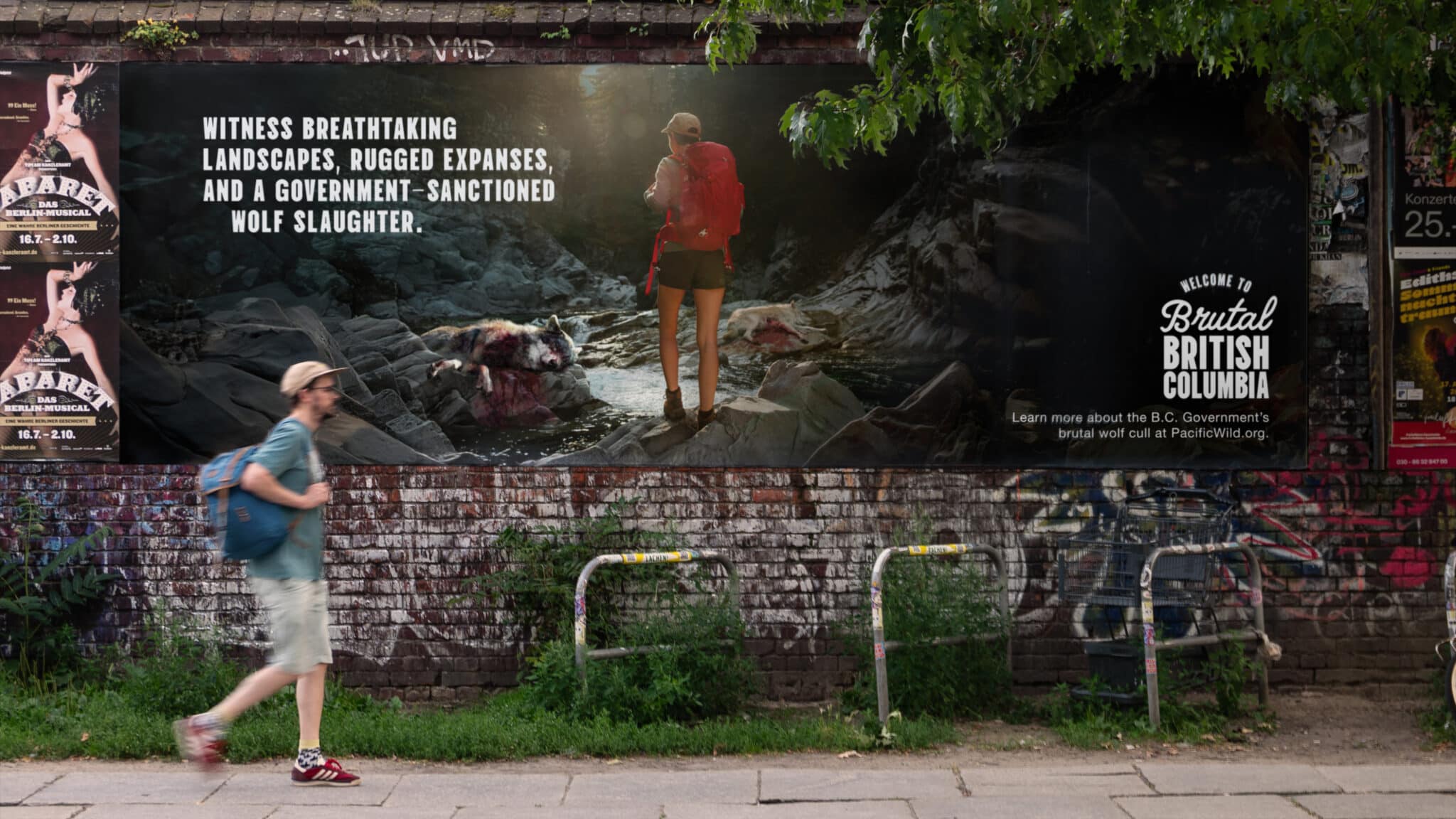
Over the years, we’ve mobilized widespread public awareness and support through media coverage and advocacy campaigns such as Howl to Horgan, CariboutWolves, and this year’s Brutal B.C. campaign, featuring billboards, a souvenir shop and a video exposé. Prominent voices, like Miley Cyrus, have also joined the call, amplifying the message that this harmful program must end.
Despite growing public opposition –over 70 per cent4 of British Columbians agree that wolves play a vital role in the ecosystem and require protection–the wolf cull still operates through a web of exemptions and loopholes. Meanwhile, it fails to address the real drivers of caribou decline: habitat loss and mismanagement. Human activity continues to push B.C.’s caribou toward extinction, while wolves pay the price with their lives. In ten years, the toll has reached more than 2,500 wolves– and over $11.5 million in taxpayer dollars.
In 2025, our investigation of Freedom of Information documents uncovered systemic cruelty and questionable tactics. Wolves are routinely shot with semi-automatic firearms –designed for combat, not wildlife management– often after being baited and tracked with modern surveillance technology. These are all violations of the Wildlife Act if carried out by members of the public.
Retired SPCA Constable Dale Bakken, who reviewed photographic records of the wolf kills, has described the aerial shooting of wolves as inherently inhumane, with little chance of a quick, clean kill. “I feel the government’s only priority is to eradicate as many wolves as quickly as they can. Humaneness is not a factor to them,” he stated in an interview with Pacific Wild this spring.
At the same time, there is the odd glimmer of hope, with the Ministry stating that a review of the predator reduction program is currently underway, with results being released in early 2026.5 As well, in response to public pressure, BC Timber Sales paused logging plans in a portion of core caribou habitat near Revelstoke.6 While the scope is small, and private logging companies have not yet followed suit, this temporary halt marks a rare move towards protecting caribou habitat instead of persecuting predators.
Brutal British Columbia
In a battle of economies, wildlife, including wolves, often comes last – overlooked and sacrificed in favour of immediate financial gain. However, the economic landscape in B.C. is changing; in 2023, tourism generated $22.1 billion in revenue, contributed $9.7 billion to the province’s GDP, and supported over 125,000 jobs – surpassing the contributions of extractive industries like logging and mining.7 While the direct economic value of wildlife is hard to measure, wild places and abundant wildlife are major attractions for tourists seeking outdoor and nature experiences in B.C.. These figures highlight the importance of protecting B.C.’s natural heritage not only for the environment but also for sustaining a strong and resilient economy.
This summer, we flipped B.C.’s idyllic ‘Beautiful British Columbia’ brand on its head, with our Brutal British Columbia campaign, developed alongside creative agency ONE23WEST. The campaign reached global audiences through billboards in Europe, while a one-day pop up souvenir shop in downtown Victoria brought the brutal truth about the wolf cull home to residents and tourists alike.
The campaign video has garnered over 1 million views across social media platforms, and inspired hundreds to send postcards and letters to B.C.Premier Eby, urging an end to the cull. The story reached thousands through 96 media stories, and many supporters went further, writing letters to their local newspapers and amplifying our call on social media.
At Pacific Wild, our work continues to inform not only the public but the Ministry and decision makers overseeing the wolf cull. We present the latest science and ethical concerns with one clear goal: to end this cruel program and push for real action for endangered caribou by protecting critical old-growth habitat.
Bears on the Silver Screen
This spring, our short film, Return of the Great Bear, began its global journey as part of the Vancouver International Mountain Film Festival world tour. Audiences from Canada to Brazil to Belgium will have the opportunity to see this little film on the big screen until March 2026. We were especially excited about the Wuikinuxv Nation screening in the heart of the Great Bear Rainforest, the region central to the film’s story and home to several coastal First Nations who fought tirelessly to protect the grizzlies with whom they share their lands. Looking ahead to 2026, Pacific Wild has been invited to participate in the four-day Lookout Wild Film Festival in Tennessee in January and share our film with over 4,000 attendees.
Want to bring the film to your community? Email us at info@pacificwild.org
Project Director Natasha Wehn in the shadow of a giant western hemlock tree in the Tsitika river watershed, estimated to be over 800 years of age and slated to be cut in 2026.
The Fight Is Not Over. Forests Are More Than Fibre
Every year, millions of cubic metres of raw logs leave B.C. — most shipped to China for manufacturing — while thousands of forestry jobs disappear and our last ancient forests fall.8 In February, Pacific Wild documented shocking footage on Vancouver Island revealing the true scale of the problem: massive freighters loaded with raw logs, exporting both opportunity and ecological value overseas.
Old-growth forests previously deferred, like the Tsitika– home to endangered marbled murrelets and upstream from sacred killer whale rubbing beaches–are now being offered by the Province to international markets as raw logs. As Minister of Forests Ravi Parmar bluntly stated, “If you have fibre and you’re not using it, we’re coming for it.”9
Across Vancouver Island, sites like the Walbran and the Tsitika, have now seen multiple generations standing before logging trucks to stop the trees from falling. The Walbran, an epicentre of action during the War of the Woods in the 1990s, is filled with protestors once more. The Tsitika, where Karen and Ian McAllister blockaded in defence of “Block 101” over thirty years ago, is also up for auction again, with a new cutblock having its deferral status removed by BC Timber Sales (BCTS).
The path forward requires us to all be bolder, more creative, and more collaborative than ever before. This is the last stand for the last groves, and it could be our lasting legacy.
The Voice of the Forest
Pacific Wild is excited to collaborate with Old-growth Birders and Bioblitzers on a project to monitor at-risk ancient forests using Autonomous Recording Units. These devices help identify and protect endangered species — before any trees are cut.
Old-growth Birders and Bioblitzers have already recorded over 300 marbled murrelets flying through a previously deferred cutblock in the Tsitika Valley. This data is being used to advocate for designating the area as a Wildlife Habitat Area, helping to safeguard vital old-growth habitat for these birds.
Oil in Eden: The Battle for an Oil-Free Coast Reignites
For many coastal communities, the Oil Tanker Moratorium Act passed in 2019 marked the culmination of a heroic 50-year effort to keep oil tankers out of the Great Bear Rainforest. After decades of opposition led by coastal First Nations, front-line defenders, and an unprecedented wave of global support, a collective sigh of relief settled over the whale-filled waters of the North Coast.
Just six years later, that quiet has been shattered. In the wake of the tanker ban victory, LNG Canada — a consortium of multinational oil and gas companies — advanced the Coastal GasLink pipeline, which was completed in late 2023 despite long-standing Wet’suwet’en and Gitxsan opposition. Communities that spent generations fighting oil tanker expansion are now being forced to confront a new industrial reality: LNG pipelines, liquefaction facilities, and massive LNG tankers moving through the heart of the Great Bear.
And more projects are on the horizon. Two additional LNG proposals are already moving through approval and early construction stages. What was once the gateway to the Great Bear Rainforest is rapidly becoming a doorstep for foreign-owned oil and gas interests. With more LNG terminals proposed and ongoing pressure to revive the Northern Gateway oil pipeline, the lands, waters, and wildlife of B.C.’s north coast face renewed threats.
LNG was introduced to the coast with the narrative that it was “cleaner” and safer than crude oil, a perspective supported by some First Nations governments. Yet, many risks remain — and some are worse. While an oil spill would devastate fisheries, food security, tourism, and Indigenous cultural practices, LNG’s full life-cycle carbon emissions — from fracking and pipelines to liquefaction, transport, and regasification — rival or exceed those of coal and oil.10
Locally, the consequences are already unfolding. The most important fin and humpback whale habitat on the B.C. coast is now threatened by a dramatic surge in underwater noise and the heightened risk of fatal ship strikes.
The True Cost of Trawling
After nearly two years of intensive research, we released Dragged to Death, our trawl mapping project that exposes the true footprint of industrial trawling along the B.C. coast. Using Automatic Identification System (AIS) data, we uncovered what happens in the wake of the nine largest trawlers operating in these waters.
Between June 2009 and June 2024, just nine trawlers travelled 907,680 kilometres – the equivalent of circling the globe more than 22 times. Our mapping shows that the cumulative trawling footprint from this small fleet is roughly the size of Ireland. This 3D footprint reflects the toll trawling takes from surface to seafloor, with sweeping losses across ecologically sensitive habitats. Many areas have been trawled repeatedly, compounding habitat destruction and stalling recovery in areas vital to marine biodiversity and ecosystem health.
One of the most troubling findings was the frequency of trawling inside Marine Protected Areas (MPAs). These areas should be refuges for marine life, yet our maps showed persistent trawling within their boundaries — undermining conservation goals and public confidence. Canada must enforce minimum protection standards across all MPAs in B.C.. The term “protected” has no meaning when destructive fishing continues unchecked. True protection begins with drawing a firm line: banning bottom trawling in MPAs once and for all.

Between 2009 and 2024 these nine trawlers travelled 907,680 km, a distance equivalent to circling the globe over 22 times.

Over the past 13 years, these vessels’ midwater and bottom trawl fishing has impacted approximately 89,700 km² of the coast.

Average of 225 prohibited or non-target species or species groups caught incidentally each year in B.C.12

50% of glass sponge reefs destroyed by bottom trawlers by the time they were discovered in 1987.13
47 instances of trawlers likely fishing in MPAs (2009-2024).
Equally alarming is the overlap between trawl activity and B.C.’s biodiversity hotspots. Our analysis shows frequent trawling along salmon migration corridors and in critical feeding grounds for Southern Resident killer whales – zones that are lifelines for species already struggling to survive.
“There is no place for these types of fishing practices within Haida territory.”
Council of the Haida Nation public declaration on trawling, March 15, 2025
Mapping and monitoring reveal a stark truth: trawlers are hammering salmon migration routes, with bycatch totals up to 712% higher under enhanced monitoring over the past two years than previously recorded by standard monitoring.11 In that time, nearly 30,000 salmon were reported as bycatch in the groundfish trawl fishery. The fleet now faces a cap of 9500 Chinook salmon bycatch per season — a first step towards accountability.
Next, we must demand enhanced monitoring for other critical species, such as Pacific herring. There’s still a long way to go—data on this fishery remains notoriously hard to access. But we’ll keep trawling for truth until full transparency is achieved.
The Trawl Trail: Following Vessels That Drag Our Coast
Embarking on this mapping project revealed just how steep the cost of transparency can be when trying to monitor the groundfish trawl fishery. As GIS Analyst Kevin Lester explains, “We ended up having to rely on older datasets and dig into hard-to-access records just to piece together the full story of these vessels. From there, we could see where they were built, track when they crossed through Panama, where they fished before arriving here in B.C.. Getting this information shouldn’t be so difficult, especially when these vessels have such a massive impact on the B.C. coast and should be tracked

through a more public dataset.”
To see the entire storymap visit: https://tinyurl.com/draggedtodeath
Turning the Tide: A New Era for Marine Protection
After more than a decade of tireless effort, 2025 marks a historic milestone as the Great Bear Sea Marine Protected Area (MPA) Network enters its site-implementation phase. This achievement is a powerful testament to collaborative governance, led by First Nations working alongside the federal and provincial governments. The network stands as the world’s largest Indigenous-led, co-developed MPA system—a model for ocean conservation everywhere.
While this progress is momentous, the work continues. As an active stakeholder in the conservation sector, we are working to ensure that both new and existing MPAs are backed by strong protections. Resistance from some industry groups persist, making public education about the long-term benefits of MPAs more important than ever. MPAs are not about shutting fisheries down, they are about safeguarding their future. The science is clear: well-designed and well-enforced MPAs protect critical ecosystems, rebuild fish stocks, and sustain healthy fisheries for generations.
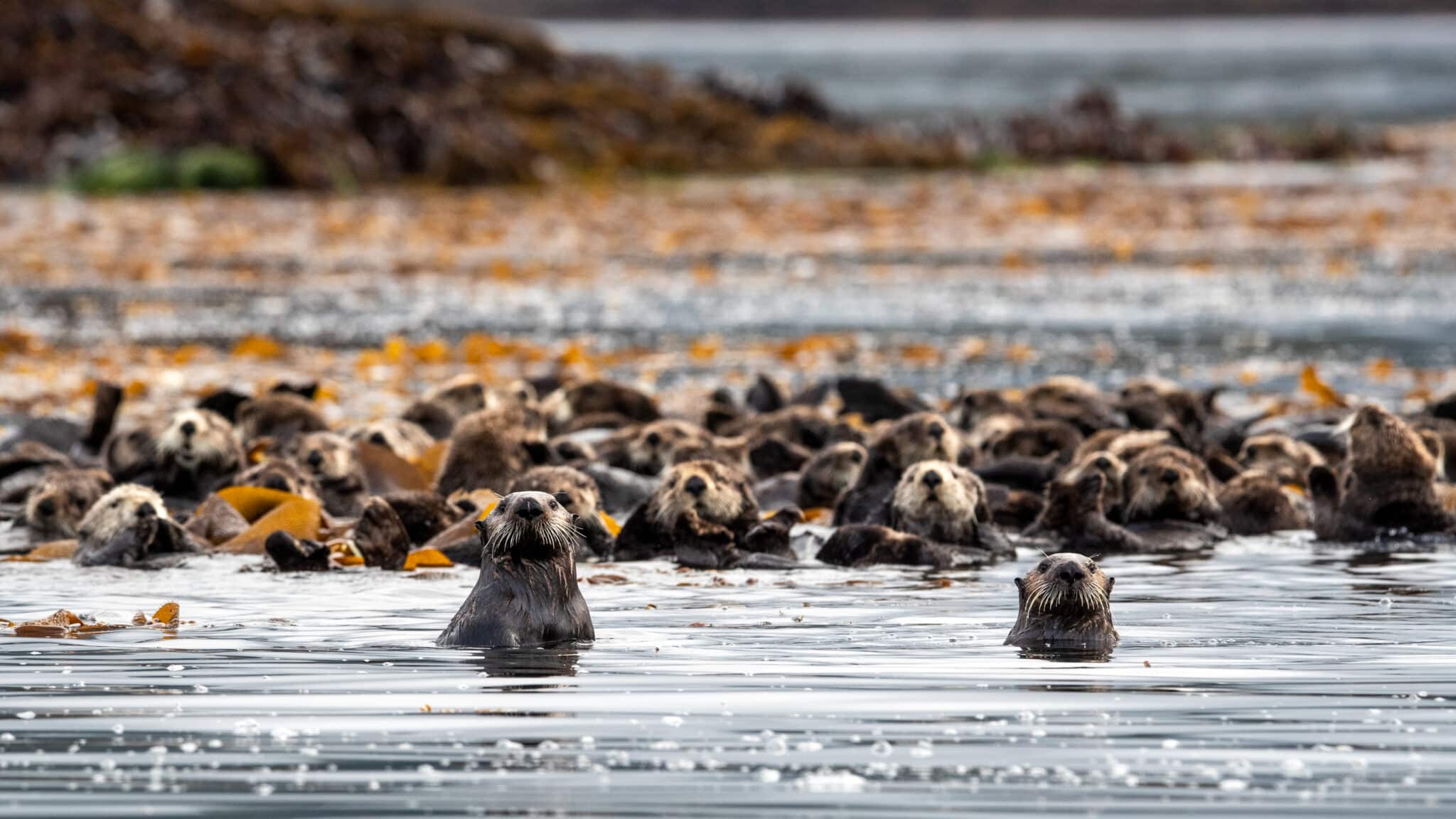
We’re proud to be expanding marine protection efforts to Haida Gwaii, joining the Nearshore Haida Gwaii Advisory Committee, and strengthening relationships in this remarkable region.
On the global stage, the 2025 ratification of the High Seas Treaty marks another watershed moment, promising stronger protections for the two-thirds of the ocean beyond national jurisdictions. While Canada has yet to join the ratification of the High Seas Treaty, it has now signed the agreement.
Together, these achievements show what’s possible when Indigenous leadership, governments, and communities unite to secure a healthier future for our oceans.
Herring Are Life
Herring remain at the very heart of coastal ecosystems and Indigenous cultures. For millennia, communities have gathered herring eggs off of hemlock boughs to share and trade locally. This spring marked a significant development for a commercial First Nation spawn-on-kelp fishery on the west coast of Vancouver Island (WCVI). The herring roe kill fishery has been closed for 20 years now on the WCVI, and this is a hopeful example of how Indigenous knowledge can guide a future where economic and environmental sustainability co-exist. As Kadin Snook, Fisheries Coordinator at the Ha’oom Fisheries Society, put it: “The spawn is life.”
Equally groundbreaking was the release of Canada’s first-ever legally mandated rebuilding plan for depleted fisheries. The Haida Gwaii Pacific Herring Rebuilding Plan exemplifies what’s possible when management rises above politics and extraction. Co-developed by the Council of the Haida Nation, Fisheries and Oceans Canada (DFO), and Parks Canada, it is built on an ecosystem-first approach — treating herring not as a quota to be divided up, but as a foundational species intertwined with Haida culture and marine biodiversity. This bold, collaborative leadership is exactly what the ocean needs.
Yet, even in the face of progress, old mistakes persist. On the south coast, DFO increased the commercial herring quota in the Strait of Georgia from 10% to 14% this year, despite ongoing concerns about these fragile stocks. The results were predictable: seine vessels couldn’t fill their quota, and gillnetters required a second opening just to meet theirs.
Climate change only adds urgency. Rising ocean temperatures mean, herring are getting hot, and their uncertain future ripples through the food web. Without strong herring populations, wild salmon cannot thrive — the connection between these species is undeniable. If we care about salmon, we must first protect herring.
The solutions are clear:
- A moratorium on industrial herring kill fisheries until stocks return to healthy, sustainable levels.
- A shift toward ecosystem-based management that prioritizes biodiversity and Indigenous knowledge over short-term harvest.
- Differentiation between migratory and resident herring populations in management plans.
There are reasons for hope. WSÁNEĆ hereditary chiefs are calling for an immediate moratorium on all commercial herring fisheries in the Salish Sea. At Herring Fest on Hornby Island — the epicentre of one of the last great spawning events — hundreds gathered to witness this natural wonder and to raise their voices for protection. It was a reminder that public momentum is building, and that the tide can turn.
This season, we’ll be tracking the Food & Bait fishery, in addition to the roe fishery. We’ve also begun work to map and identify where critical offshore herring habitats overlap with trawling activity.
Herring are life. Until we honour them as such, we risk losing not only a species, but the very foundation of the Pacific coast.
Wild Salmon in Peril: Politics Over Protection
Wild salmon up and down the B.C. coast face ongoing threats, yet political decisions continue to prioritize industry over conservation. In 2024, the government backtracked from its earlier commitment to phase open-net pen salmon farms out by 2025, granting a new five-year extension allowing these farms to operate until 2029. Now the aquaculture industry is lobbying not only to maintain open-net farms, but to expand them.14 Cermaq’s CEO recently admitted that the company is “working on the assumption that [the Canadian salmon farm ban] will be changed,”15 revealing an expectation of a political reversal rather than adapting to sustainable alternatives.
For decades, First Nations have led the fight to protect wild salmon. Over 120 First Nations call for the removal of open-net farms, citing threats to their cultural practices, food security, and their rights to manage healthy wild salmon populations. This May, the‘Na̱mg̱is Nation hosted a salmon feast backed by ‘Na̱mg̱is Chief and Council, along with several Nations and hereditary chiefs, reaffirming their vision for a fish farm-free future while raising support for potential legal actions. In October, Bob Chamberlain, chair of the First Nations Wild Salmon Alliance, called on Prime Minister Carney for a meeting to discuss investing in wild salmon protection as a nation-building priority. In November, the Ḥupačasatḥ and Tseshaht Nations hosted a Migratory Salmon Potlatch where hereditary chiefs and leaders from more than two dozen nations signed a powerful declaration, calling for an immediate end to open-net pen salmon farms in B.C..

This year, Pacific Wild has joined these efforts by engaging in federal transition plan consultations, advocating for a science-based, rights-respecting transition that prioritizes wild salmon recovery and fully land-based, closed containment aquaculture.
The stakes are high. Two-thirds of wild salmon populations In B.C. and the Yukon remain below historic spawning averages.17 While some southern B.C. salmon runs show encouraging increases, experts caution that these gains may reflect short-term environmental factors rather than lasting recovery. Many key habitats continue to be stressed from warming waters, habitat loss, and other pressures. Now is the time to build on this positive shift and push even harder for protection.
Coastal Carnivores: New Research Launch
The fall marked a return to school for many, including our Marine Specialist, Sydney Dixon, who recently completed a residency at Royal Roads University, laying the foundation for her Masters of Science research. This research will use non-invasive methods, like un-baited, no-glow remote cameras, and scat DNA metabarcoding to study large carnivores on B.C.’s west coast.
Sydney’s research aims to deepen our understanding of the movement patterns, resource use, and ecological roles of species where terrestrial and marine ecosystems overlap. Pacific Wild is proud to partner and support this research, launching this spring. We look forward to sharing firsthand updates from the field as this project unfolds!
The Science Behind the Stories: Our Resource Collections

At Pacific Wild, we believe that conservation is strongest when it weaves together western science and traditional ecological knowledge. Our campaigns are guided by this holistic approach — working to protect wildlife, safeguard healthy ecosystems, and support the well-being of human communities, recognizing that we all depend on a thriving natural world.
This year we published three detailed science resource lists. Two — covering herring and wolves — have been updated with the latest information, while our resource summary for fish farms is brand new. We invite you to explore the science that informs and strengthens our advocacy. These resources are freely available and intended to support a wide audience — from teachers and students to researchers and anyone passionate about protecting the natural world. You can find them on our website under Research and Education.
Celebrating Our Achievements in Conservation
We are proud to be recognised across several fields this year, some highlights include:
- Pacific Wild was a finalist in the Clean Oceans category at the 2025 Ecostar Awards.
- Our trawl story map, “Dragged to Death” was a finalist in the Map with a Message category at the 2025 Esri User Conference..
- Pacific Wild and Edery & Lord Communications were honoured at the 2025 Canadian Public Relations Society (CPRS) Toronto ACE Awards for our ”F*** Off Fish Farms” (FOFF) campaign featuring William Shatner. Together, we won five prestigious awards including “Best in Show!”
The Passage Paddle Expedition Fundraiser
Five Women. A Passion for the B.C. Coast. Over $10k Raised for Marine Protection.
Because of you, the Passage Paddle became a celebration of community power on the coast. Supporters sponsored 598.5 km – beating the 575 km goal– which was the distance paddlers travelled to reach the Alaska border in early August. With an $18-per-kilometre sponsorship, this raised over $10,700 for marine protection in the Great Bear Sea. Along the way, updates and stories were posted on a story map on Pacific Wild’s website, bringing the journey and the coastline to life for followers of the expedition. This fundraiser shows how shared care for salmon, whales, and wild shorelines can build lasting momentum for conservation. From launch to the final stroke, your support kept the crew moving and the conversation growing, helping more people understand why protecting this coast matters.

The Bakkens: A Legacy Rooted in Love for the Wild

For Dale Bakken and Sandra Lynch-Bakken, caring for wildlife isn’t just a chapter — it’s their whole story. From childhood moments feeding deer in Algonquin to years working with animals across three countries, they have always been drawn to the quiet, watchful work of noticing and protecting. Wolves hold a special place in their hearts; seeing their first pack on their property “took our breath away,” deepening their resolve to keep this place safe.
When they found their property near New Hazelton, B.C., it had been heavily logged — no tracks, no sightings. With patience, they watched it come back to life. “It was a diamond in the rough… now a gleaming, breathtaking jewel.” Trail cameras capture the unexpected: a wolverine slipping past, wolves moving as a family. That sense of family is why the Province’s wolf cull pains them — and why they hope to see more protections for wolves and other wildlife.
Their legacy gift — entrusting their New Hazelton land to Pacific Wild — is rooted in values they’ve lived by: preserve what remains, respect wildlife as feeling, thinking beings, and keep wild places whole. They chose Pacific Wild because we stand up for the whole system — oceans, salmon, forests, apex species — in and out of court. Their gift ensures this land keeps giving back, offering room for wildlife to move, rest, and thrive.
To learn more about leaving a gift in your will, visit https://pacificwild.org/ways-to-give/planned-giving-how-to-leave-something-behind-for-wildlife/ or contact Laurie at development@pacificwild.org.
What Would We Do Without Our Volunteers?

From tabling at markets, to stuffing envelopes, to keeping our wolf display at the legislature from flying away, our work wouldn’t be possible without you! A huge shout out to some of 2025’s superstars: Barb Murray, Susan Conrad, Kevin Solski, Nicholas Read, Amelia Christney, and Madison Hulzebosch. Your dedication and energy make all the difference, and we are deeply grateful.
We’ve also been fortunate enough to partner with the University of Victoria chapter of Pro Bono Students Canada for the last two years on several legal research projects. Thank you to supervising lawyer Matt Hulse from Ecojustice and to the hardworking students Jordan Silke, Rakshan (Ryan) Balachandran, Meagan Siemaszkiewicz for their preparing internal policy briefs and researching the trawl fishery in 2023-2024, and Laine Ramsay and Llana Arreza for their research on into the wolf cull in 2024-2025. We look forward to seeing what we can accomplish with this year’s students!
Wild Giving League: Your Monthly Magic in 2025
More than 400 of you showed up month after month because you love British Columbia and all the beings who call it home. Your steady care has been like a hand on our shoulder — season to season, tide to tide — helping us protect what you cherish: salmon returning, orcas breaching, wolves howling, and ancient cedars standing tall.
How your monthly kindness makes a difference on the ground:
- Reliable support to carry fieldwork and storytelling through every season.
- The courage to tackle complex issues and demand better policies.
- Connection: clear, creative campaigns that bring the wild into everyday conversations.
This community is a chorus for the voiceless — wild places, wild creatures, and the waters that connect them. Thank you for being part of the Wild Giving League!

journal hard copy
We mail hard copies of the Pacific Wild Journal to our donors every fall.
Don’t miss out in 2026.
View a digital pdf of the journal here:
Credits
Written by: Karen McAllister, Laurie McConnell, Natasha Wehn, Sydney Dixon, Ian McAllister
Photography by: Ian McAllister
Additional Photography by: Lars Isaac, Natasha Wehn, Sydney Dixon, Dale Bakken, The Passage Paddlers, ONE23WEST
References
- Government of British Columbia. (n.d.). BC Species & Ecosystems Explorer. https://a100.gov.bc.ca/pub/eswp/search.do
- (2025, April 22). Nature Tops List of Most Resonant Sources of National Identity. EKOS Politics. https://www.ekospolitics.com/index.php/2025/04/nature-tops-list-of-most-resonant-sources-of-national-identity/
- Ward, J. (2025, May 29). RE: caribou recovery newsletter update [Email RE: caribou recovery newsletter update].
- Canesco, M. (2025, Nov 20). Research Factum by Research Co.
- Duerksen, S. (2025, August 2). Brutal British Columbia’ pop-up in Victoria sparks conversation on wolf cull. Oak Bay News. https://www.oakbaynews.com/home/brutal-british-columbia-pop-up-in-victoria-sparks-conversation-on-wolf-cull-8171484
- Labbé, S. (2025, May 20). BC Timber Sales pauses logging in threatened caribou habitat. BIV. https://www.biv.com/news/bc-timber-sales-pauses-logging-in-threatened-caribou-habitat-10683452#:~:text=The%20B.C.%20government%2Drun%20corporation,caribou%20herd%20north%20of%20Revelstoke.
- Destination BC Corp. (2023). Various performance indicators for Canada, BC and British Columbia’s six tourism regions. https://www.destinationbc.ca/research-insights/type/industry-performance/?value-of-tourism=true
- Parfitt, B. (2017, February 27). The Great Log Export Drain: BC Government pursues elusive LNG dreams as more than 3,600 forest industry jobs lost to Raw Log exports – CCPA. https://www.policyalternatives.ca/news-research/log-export-drain/#.WLQ4jDulkh0.twitter
- Parfitt, B. (2025, August 20). Is BC’s Forestry Ministry ‘Coming for’ Unused Licences? The Tyee. https://thetyee.ca/Analysis/2025/08/20/BC-Forestry-Ministry-Coming-For-Unused-Licences/
- Howarth, R. W. (2024). The greenhouse gas footprint of liquefied natural gas (LNG) exported from the United States. Energy Science & Engineering, 12(11), 4843–4859. https://doi.org/10.1002/ese3.1934
- Lagasse, C. R., Fraser, K. A., Braithwaite, E., & Komick, N. (2025). Salmon bycatch monitoring and sampling results for the Pacific Region 2023/24 groundfish trawl fishery (Canadian Manuscript Report of Fisheries and Aquatic Sciences No. 3298, vi + 41 pp.). https://doi.org/10.60825/d0e4-pp46
- Fisheries and Oceans Canada (2024). Groundfish Data Unit. Stock Assessment and Research Division, Fisheries and Oceans Canada. Data provided on May 2, 2024.
- Conway, K. W., Krautter, M., Barrie, J. V., & Neuweiler, M. (2001). Hexactinellid sponge reefs on the Canadian continental shelf: A unique “living fossil.” Geoscience Canada, 28(2), 71–78.
- Miljure, B. (2025, July 10). Salmon farming opponents and advocates unsure if feds will follow through on West Coast ban. CTV News. https://www.ctvnews.ca/vancouver/article/salmon-farming-opponents-and-advocates-unsure-if-feds-will-follow-through-on-west-coast-ban/
- Gibson, D. (2025, June 5). Cermaq CEO works on belief Canadian salmon farm ban will be overturned. Undercurrent News. https://www.undercurrentnews.com/2025/06/05/cermaq-working-on-belief-that-canadian-salmon-farms-to-be-reinstated/
- Pacific Salmon Foundation. (2025). State of Salmon 2025 report. Pacific Salmon Foundation. https://doi.org/10.60740/stateofsalmon.2025